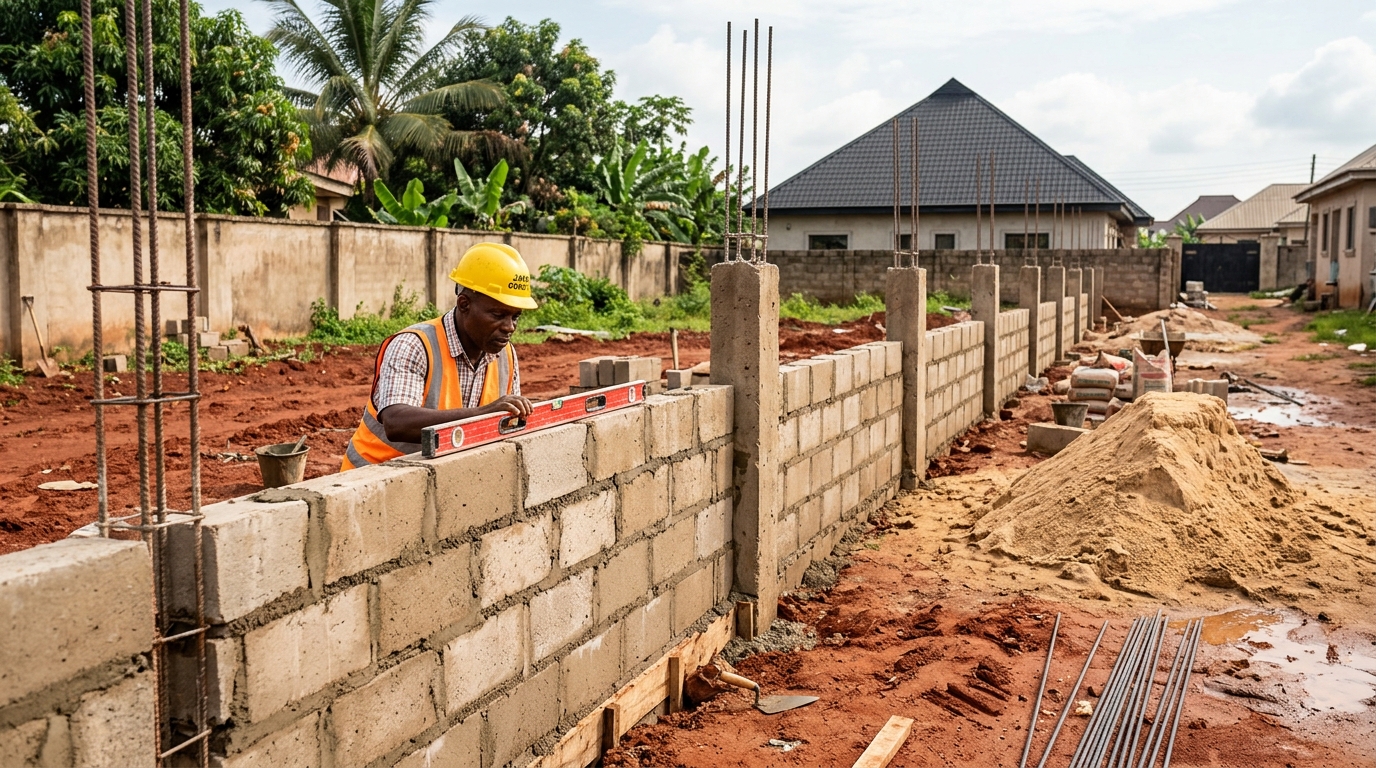
On almost every construction site in Lagos, Abuja, Port Harcourt, and across Nigeria, one heated debate repeats between homeowners, site supervisors, and bricklayers:
"Oga, how many blocks can one bag of cement produce?"
For years, unregulated roadside operators have cut corners, stretching one 50kg bag of cement into 50, 60, or even 70 hollow blocks to undercut competition.
Tragically, this practice is the single leading cause of structural wall cracks, waterlogged rooms, and catastrophic building collapses across Nigeria.
To protect your family, your capital, and your building's integrity, here are the official engineering standards for cement-to-sand ratios and the exact math for 100 and 1,000 blocks.
The Official Standard: Nigerian Industrial Standards (NIS 87:2004)
The Standards Organisation of Nigeria (SON) regulates block manufacturing under standard NIS 87:2004 (Specification for Sandcrete Blocks):
1. Load-Bearing Walls (Foundation & Exterior Walls)
- Specification: Minimum compressive strength of 3.45 N/mm² for individual blocks, and average 3.5 N/mm² across batch tests.
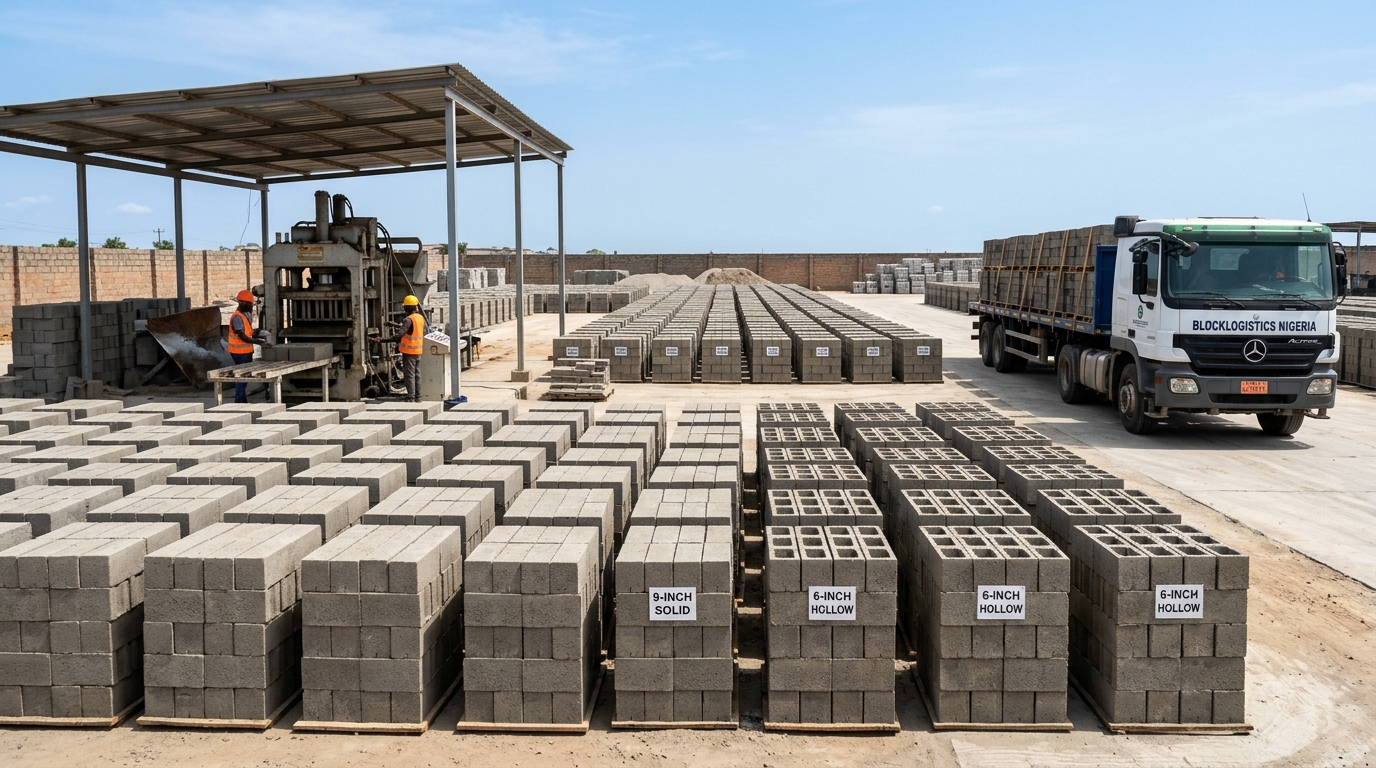
- Yield: One 50kg bag of Grade 42.5R Portland cement must produce no more than 30 to 35 units of 9-inch blocks or 40 units of 6-inch solid blocks.
- Sand Proportion: 1 part cement to 6 parts clean sharp sand (1:6 volumetric mix).
2. Non-Load Bearing Walls (Internal Room Partitions)
- Specification: Minimum compressive strength of 2.5 N/mm².
- Yield: One 50kg bag of cement should produce maximum 45 to 55 units of 6-inch hollow blocks.
The Math: How Many Bags of Cement For 100 Blocks?
Using certified NIS standards, here is how many bags of cement you need per 100 blocks:
| Block Type | Target Yield (Blocks / Bag) | Cement Bags Needed Per 100 Blocks | Cement Bags Needed Per 1,000 Blocks |
|---|---|---|---|
| 9" Heavy-Duty Solid Block | 30 – 35 blocks | 3.0 – 3.3 Bags | 30 – 33 Bags |
| 9" Sandcrete Hollow Block | 35 – 40 blocks | 2.5 – 2.8 Bags | 25 – 28 Bags |
| 6" Vibrated Solid Block | 40 – 45 blocks | 2.2 – 2.5 Bags | 22 – 25 Bags |
| 6" Sandcrete Hollow Block | 50 – 55 blocks | 1.8 – 2.0 Bags | 18 – 20 Bags |
Rule of Thumb for Site Owners: If anyone quotes you 1 bag of cement yielding 65 or 70 blocks, reject the batch. You are buying compressed sand with zero binder strength that will dissolve during heavy rainfall.
The Hidden Chemistry: Why Water Curing Is The Real Secret
Many people believe concrete dries like paint to get hard. This is completely wrong.
Concrete does not dry to get strong; it hydrates chemically. When water mixes with Portland cement compounds (tricalcium silicate), it initiates an exothermic chemical reaction forming calcium silicate hydrate (C-S-H) gel — the microscopic crystalline glue that locks sand grains permanently together.
What Happens When Blocks Are Sun-Dried?
If freshly molded blocks are left under the hot Nigerian sun without water, the surface water evaporates before the chemical hydration can complete. The reaction halts permanently, leaving behind loose sand particles and micro-cracks.
The 14-Day Potable Water Rule:
- Fresh blocks must be shaded from direct wind and sun for the first 24 hours.
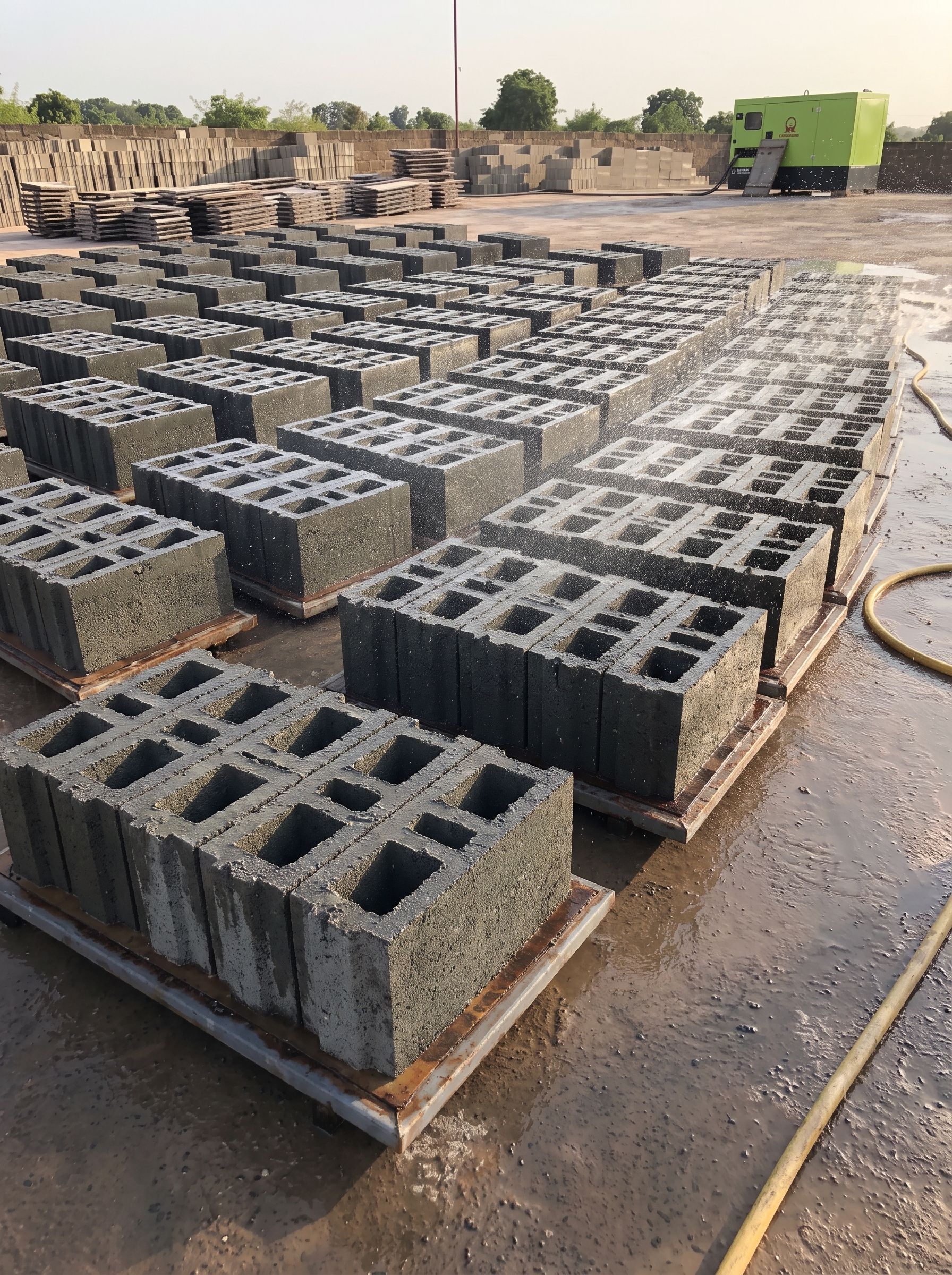
- From Day 2 to Day 14, blocks must be sprinkled with clean, drinkable water twice daily (morning and evening).
- Stacking blocks tightly and spraying them allows moisture to penetrate deep into internal cores.
- Blocks cured for 14 days achieve over 95% of their ultimate compressive strength, resisting hairline cracks and water seepage indefinitely.
Quality Sand Matters: Sharp Sand vs Soft Plastering Sand
You can use the finest Grade 42.5R cement, but if your sand is poor, your blocks will fail:
- Avoid Clay and Silt Contamination: Sand with high clay content turns muddy when wet. As it dries, clay shrinks, causing severe surface spiderweb cracks.
- Use Sharp River Sand: River-dredged sharp sand has angular, rough aggregate edges that interlock tightly with cement paste.
- Never Use Salty Sea Sand: Using untreated beach sand introduces chloride ions that corrode internal steel reinforcement bars inside columns and lintels.
Guaranteed Certified Blocks With Blucindustry
At Blucindustry, we coordinate manufacturing exclusively with high-tech yards operating hydraulic vibration presses and strict 14-day water curing protocols.
Download the Blucindustry App to calculate your project's exact block requirements, learn technical mix ratios from Moulder AI, and order laboratory-tested building materials directly to your site.